Skip to the shelves
Zarnay Yoga

Cork blocks, cotton bolsters and straps for home practice

Home › Bolsters & cushions

Cotton bolsters and buckwheat floor cushions

The two sewn props, made at our machine in Bend. Here is what goes inside them, what the covers are cut from, the shapes and measurements, and the prices: $68 a bolster, $58 a cushion.

Cotton bolster

A firm, heavy bolster in a zip-off canvas cover. Round or flat, both 26 in long.

$68each, either shape

Round
26 in long, 9 in across; about 5 lb
Flat
26 x 12 in, 6 in tall; about 5.5 lb
Fill
Layered cotton batting, rolled or stacked tight and held in an inner cotton sleeve
Firmness
Firm: it keeps its shape when you lean a forearm on it
Cover
10 oz cotton canvas, removable, with a hidden zipper under a flap
Colors
Oatmeal with clay piping, or sage with oatmeal piping
Handle
Webbing loop at one end, box-stitched

A bolster is judged by its fill. Loose stuffing shifts and leaves a hollow in the middle after a few months. Ours are built from cotton batting in layers: for the round shape the batting is rolled tight around itself, and for the flat shape it is stacked in sheets and pressed. The roll or stack is then sewn into a plain inner sleeve, so the fill stays put when the outer cover comes off for washing.

Round or flat

The two shapes are different objects, not two versions of one. The round bolster is a cylinder 9 in across. It is the taller of the two, and because it is round its top is a curve. The flat bolster is a low rectangle, 12 in wide and 6 in tall, with a level top and square sides; it stays where it is put and stacks neatly under a second one. The Prop Finder suggests by height band: under 5 ft 4 in the flat one, otherwise the round one. You are free to overrule it on the order form.

Covers

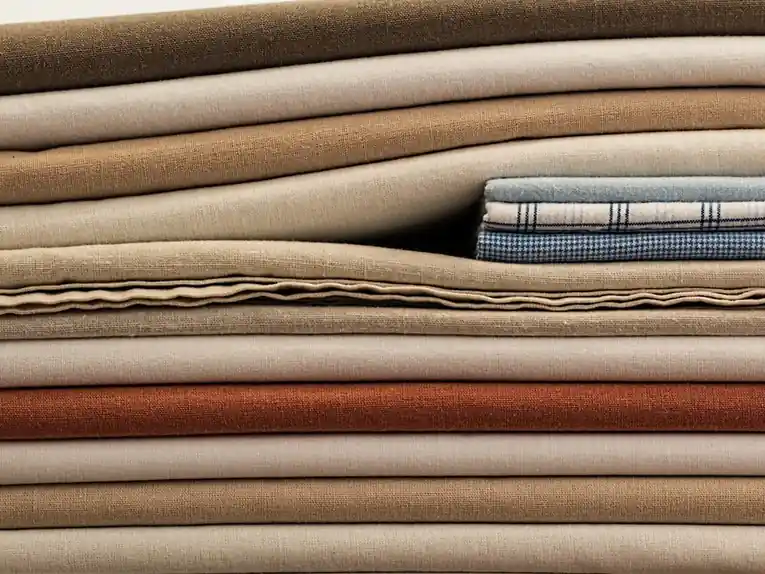
The cover is 10 oz cotton canvas, cut on the straight grain so it does not twist after washing. Seams are piped, which is the cord of contrasting color you see along the edges, and the zipper runs the length of one side beneath a flap so that metal never touches a floor. To wash it, unzip, slide out the inner bolster, machine-wash the cover cold and hang it to dry. The inner bolster is not washable; air it near an open window.
Put a bolster on an order

Buckwheat floor cushion

A pleated round cushion filled with buckwheat hulls, 14 in across and 5 in tall.

$58each

Size
14 in across, 5 in tall as shipped
Weight
About 4.5 lb
Fill
Buckwheat hulls, cleaned and sieved, in an inner cotton bag
Firmness
Firm but shifting: the hulls move and then settle
Cover
10 oz cotton canvas with pleated sides and a hidden side zipper
Colors
Clay or sage
Handle
Webbing loop on the side seam

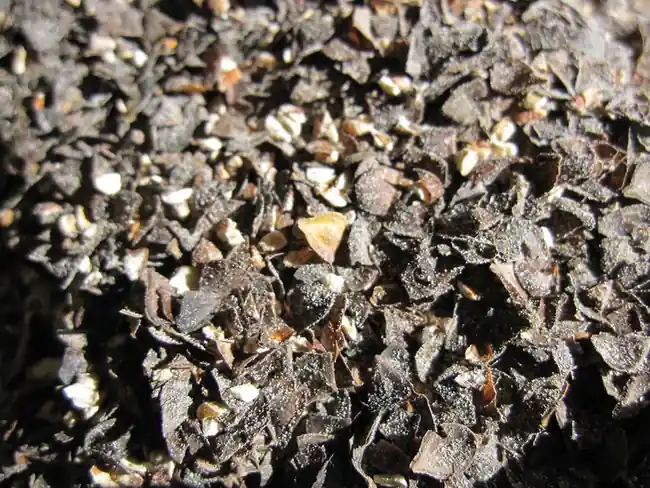
Buckwheat hulls are the dry outer husks of the buckwheat seed. Each one is a small, hard, three-sided shell. Poured into a bag by the thousand they behave like coarse sand: they flow when pushed and lock in place when the pushing stops. That is the whole reason they are used in a floor cushion. The cushion takes the shape that is pressed into it and keeps that shape until it is shaken out.

Changing the height

The cushion ships full, at about 5 in tall. Under the side flap there is a zipper in the cover and a second one in the inner bag. Open both, scoop out a few cups of hulls and the cushion sits lower and softer; pour them back and it is tall and firm again. Keep the spare hulls in a paper bag somewhere dry.

Covers and care

The pleats around the side are what let a flat circle of canvas become a drum shape. They are pressed and stitched top and bottom. To wash the cover, lift out the inner bag of hulls first, then wash cold and hang dry. Hulls must stay dry: if the cushion gets wet, empty the hulls onto a tray and let them air for a day.

Put a floor cushion on an order

A stack of folded cotton cloth in oatmeal, sand and clay tones
Canvas for covers, in oatmeal, sand and clay.
Close view of dark buckwheat hulls, the dry husks used to fill a floor cushion
Buckwheat hulls: dry, three-sided husks that flow, then settle.

Shapes and prices at a glance

PropSizeFillPrice
Cotton bolster, round26 in long, 9 in acrossRolled cotton batting$68
Cotton bolster, flat26 x 12 x 6 inStacked cotton batting$68
Buckwheat floor cushion14 in across, 5 in tallBuckwheat hulls$58

How a bolster is made here

A run starts at the cutting table. Canvas is unrolled, left to rest for a day so it loses the tension of the bolt, then marked and cut with shears: two end circles and one long body panel for a round bolster, six panels for a flat one. Piping cord is wrapped in bias-cut strips and basted to the end pieces. The zipper and its flap go in next, while the body panel is still flat, and only then are the ends sewn on. Each cover is turned, pressed and checked against a finished inner before it is zipped shut.

A restorative set-up at home often uses a bolster with two blocks and a strap, which is why the blocks and straps are cut and finished to sit with these on one shelf. The shop sews in small runs and does not take custom sizes, monograms or customer-supplied fabric.

Round or flat, cushion or bolster?

Three questions in the Prop Finder give you a shape and a total.